
Millcreek Foundation Pros
Piering and Underpinning in Millcreek, UT
Push pier and helical pier underpinning in Millcreek for settling foundations. Free estimates, written per-pier cost breakdown.
- 15+ Years local experience
- 500+ Projects completed
- Licensed & Insured
Serving Millcreek and nearby communities.
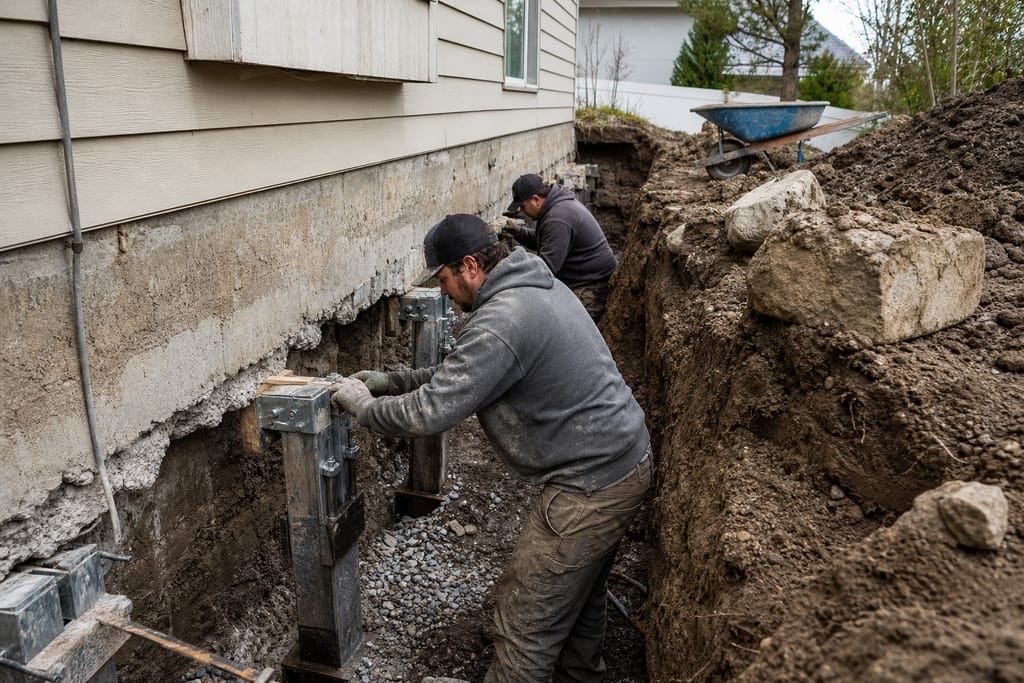
Millcreek sits on bench terrain, and that slope brings slow, steady soil movement that surface patches won't fix. When a corner sinks or a wall keeps cracking no matter what you caulk, underpinning is usually the real answer. Push piers or helical piers get driven down to load-bearing soil or bedrock, then the foundation gets transferred onto that support.
Millcreek Foundation Pros assesses pier count and placement before quoting, not after the crew shows up.
What's included
What's included with Piering and Underpinning
Typically included Optional Customer prep
- Load assessment to determine pier count and spacing
- Excavation at each pier point
- Pier driving to bearing soil and load transfer brackets
- Post-install elevation verification
- Full perimeter underpinning versus corner-only support, scoped separately
- Interior finish repair where excavation disturbs landscaping or walkways
- Clear access around the foundation perimeter where piers will go
- Move vehicles or storage away from excavation points
Want a clearer scope?
Get a Free EstimatePiering and Underpinning
The Underpinning Process
- Load Assessment — The structure's weight distribution is analyzed to determine pier placement.
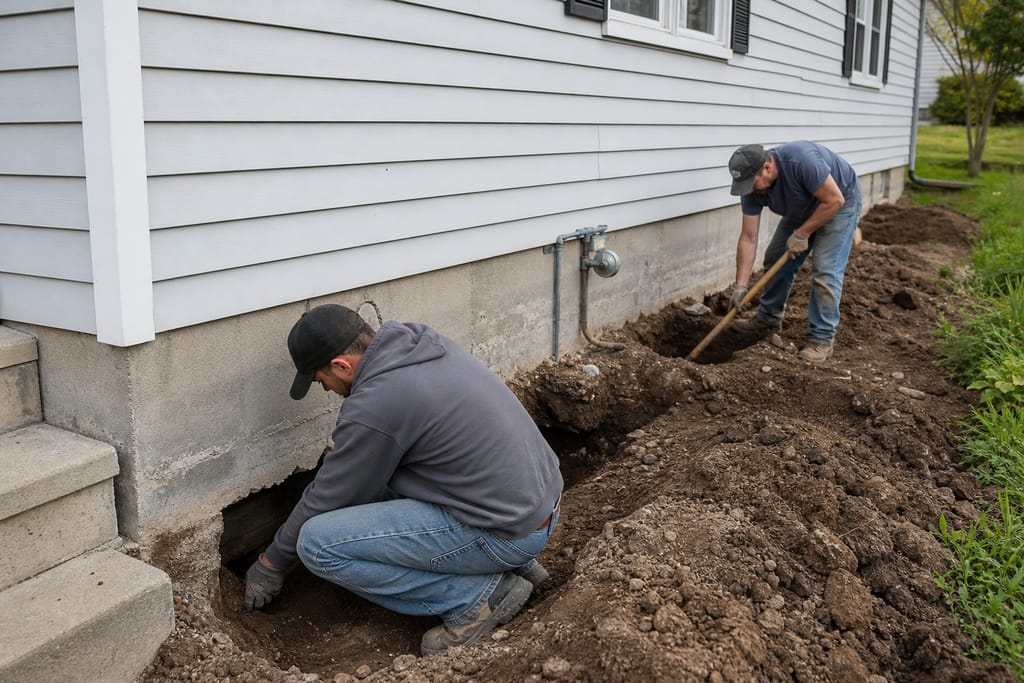
- Access Excavation — Small excavation points are created along the foundation perimeter.
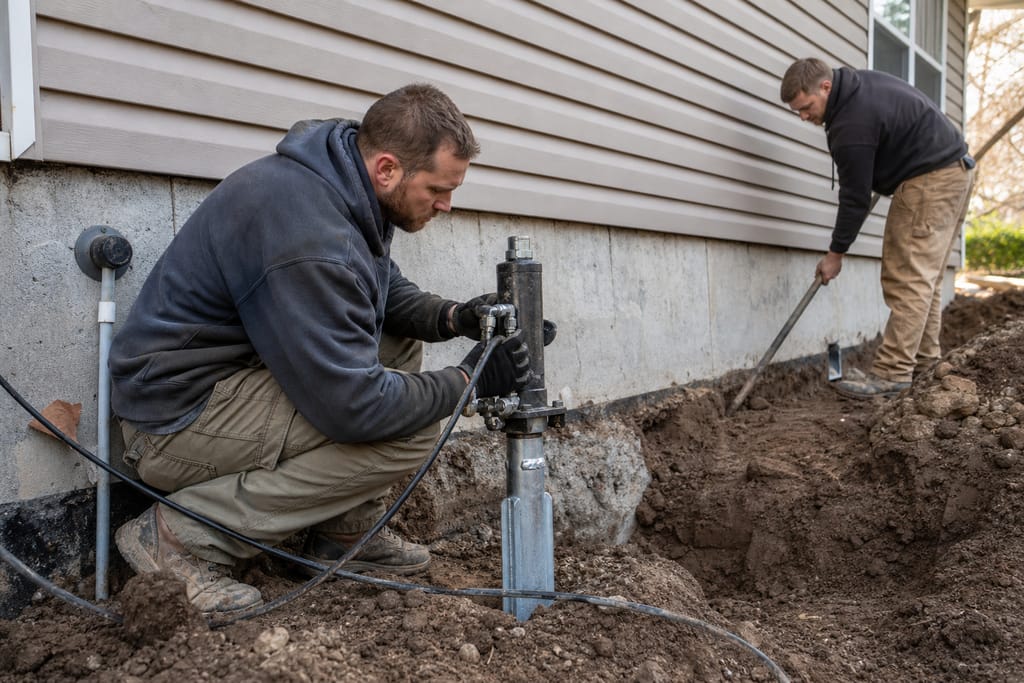
- Pier Driving — Piers are driven or screwed into the ground until reaching stable strata.
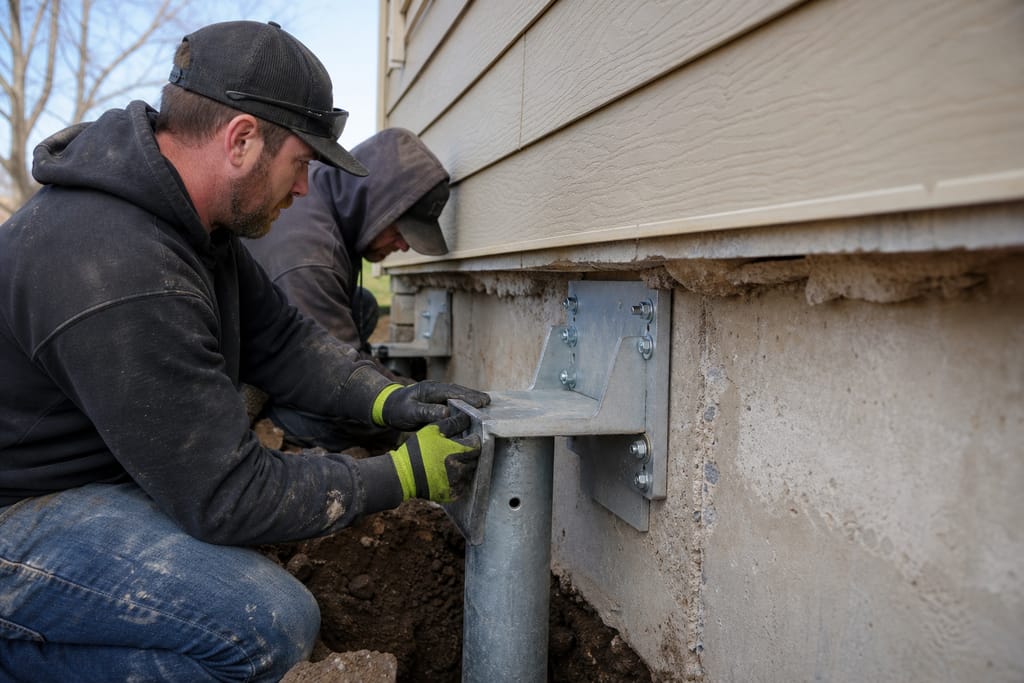
- Load Transfer — Brackets connect the piers to the foundation to redistribute structural weight.
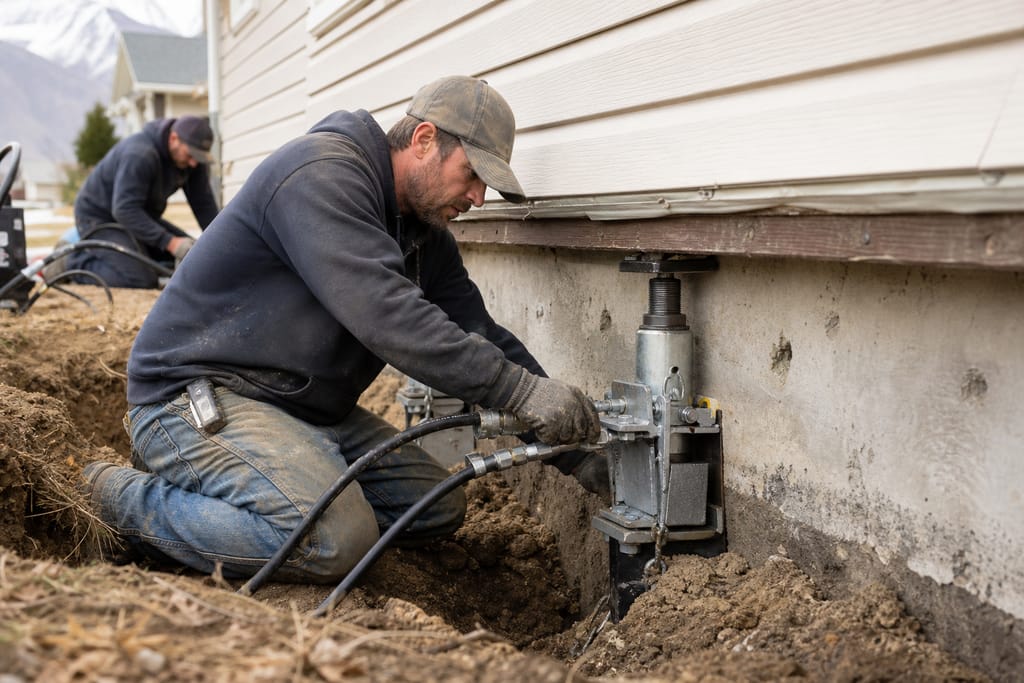
- Leveling Adjustment — Hydraulic equipment carefully raises the foundation to its intended position.
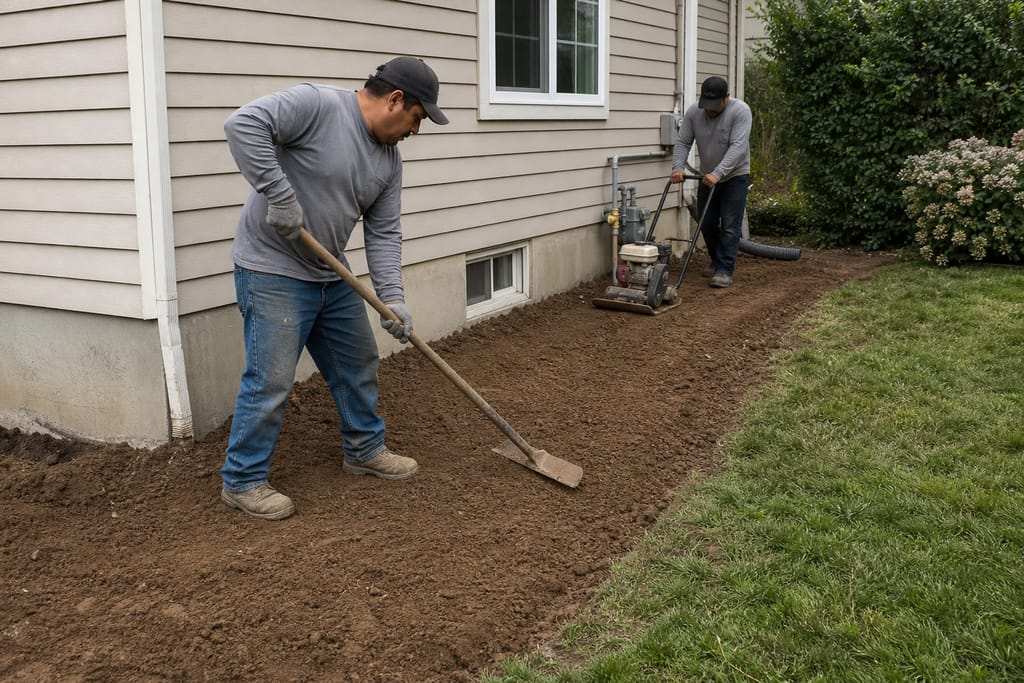
- Site Restoration — Excavated areas are backfilled and compacted to match the original grade.
Questions about this?
Get a Free EstimateMaterials
Materials and methods for Piering and Underpinning
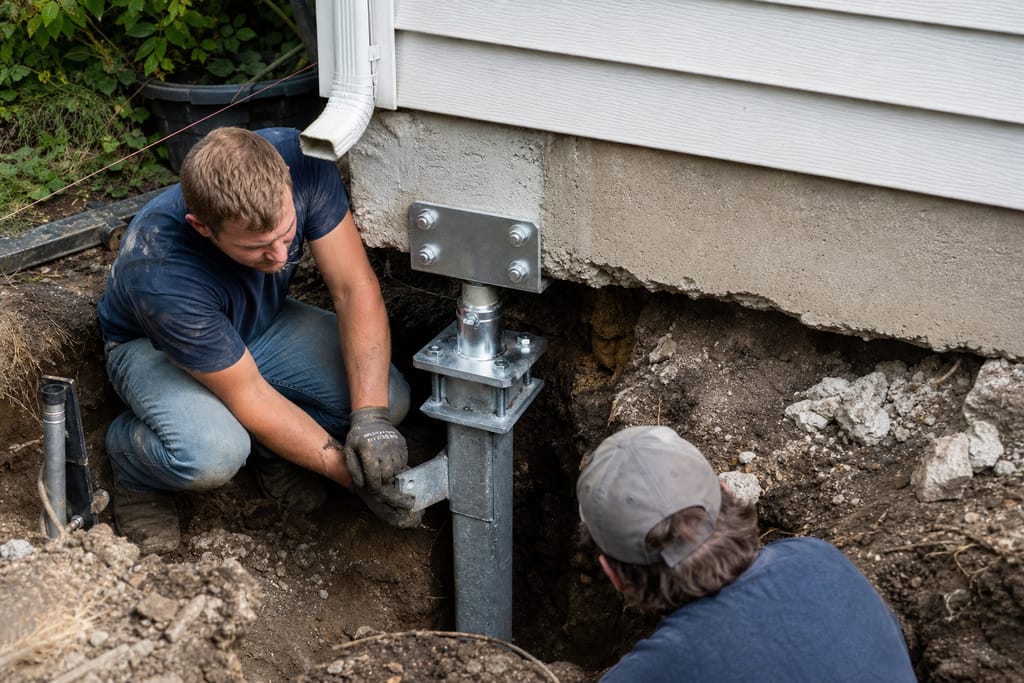
Steel Push Piers
Deliver deep, reliable support for heavier structural loads, often specified on homes needing full corner or wall support.
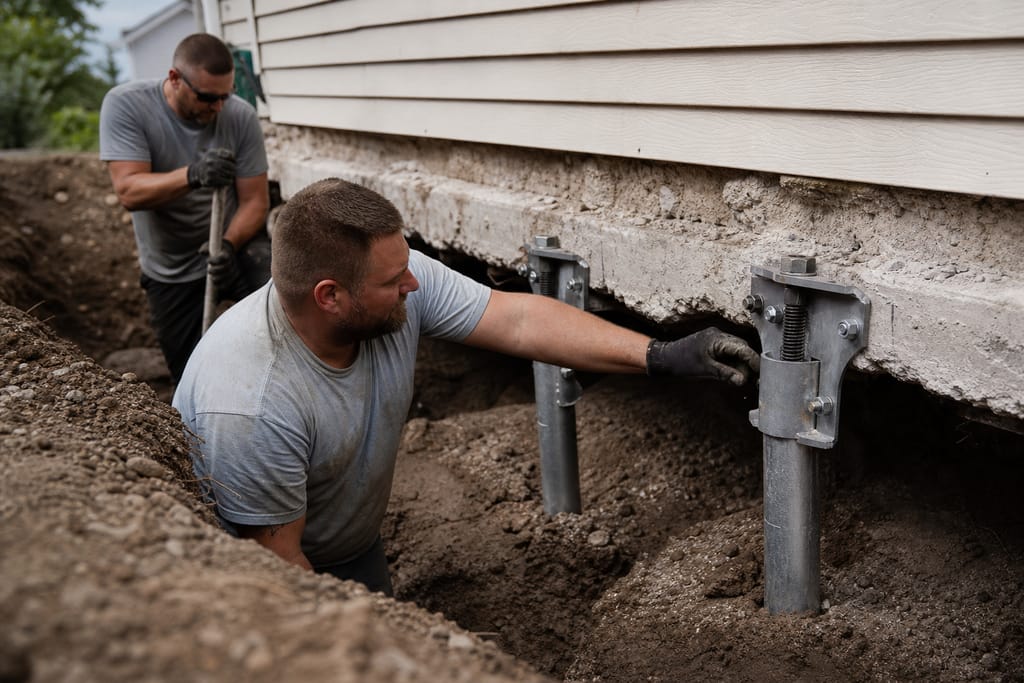
Helical Piers
Provide torque-driven support suitable for variable soil conditions, a good fit where bench terrain soil quality shifts across a lot.
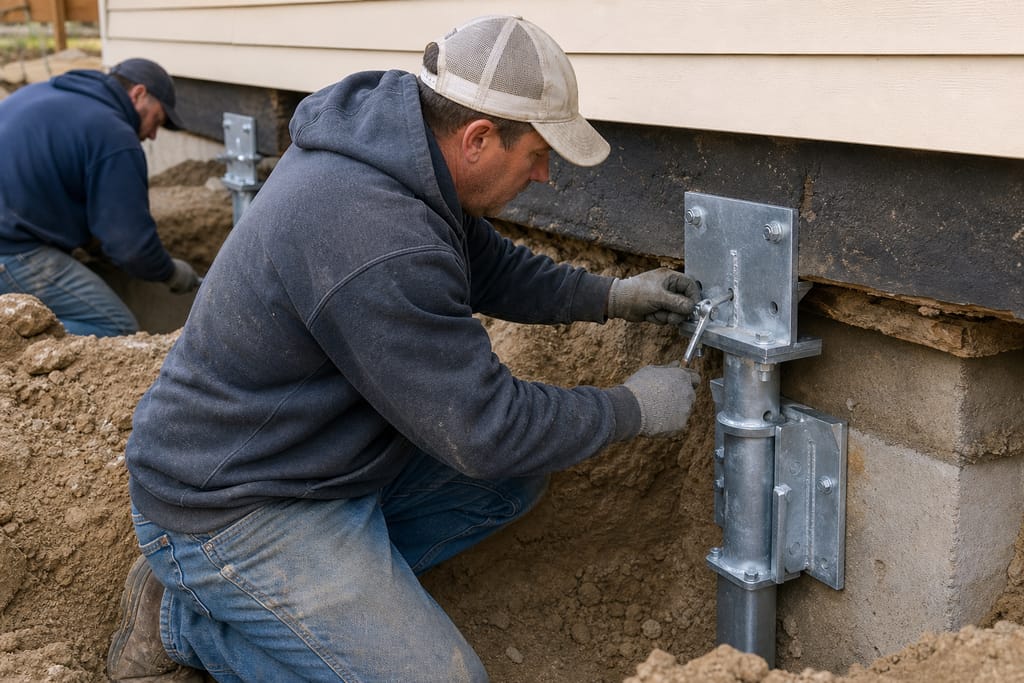
Underpinning Brackets
Connect piers securely to existing foundation footings for consistent load transfer.
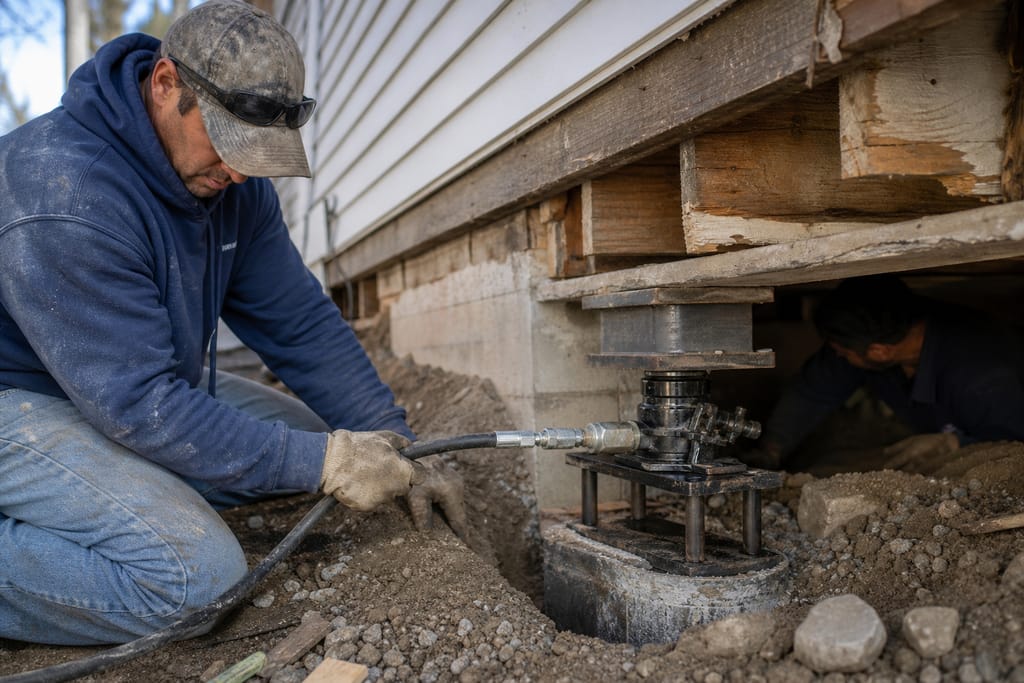
Hydraulic Lift Systems
Used to achieve controlled and precise foundation elevation changes.
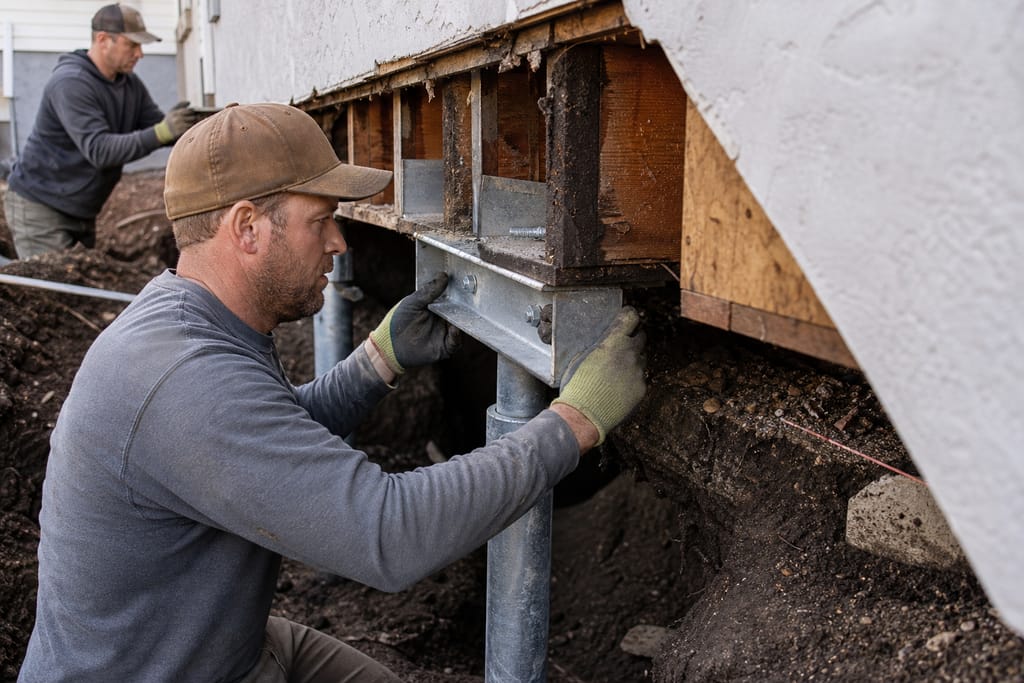
Galvanized Coatings
Protect steel components from corrosion over time, important given spring groundwater exposure.
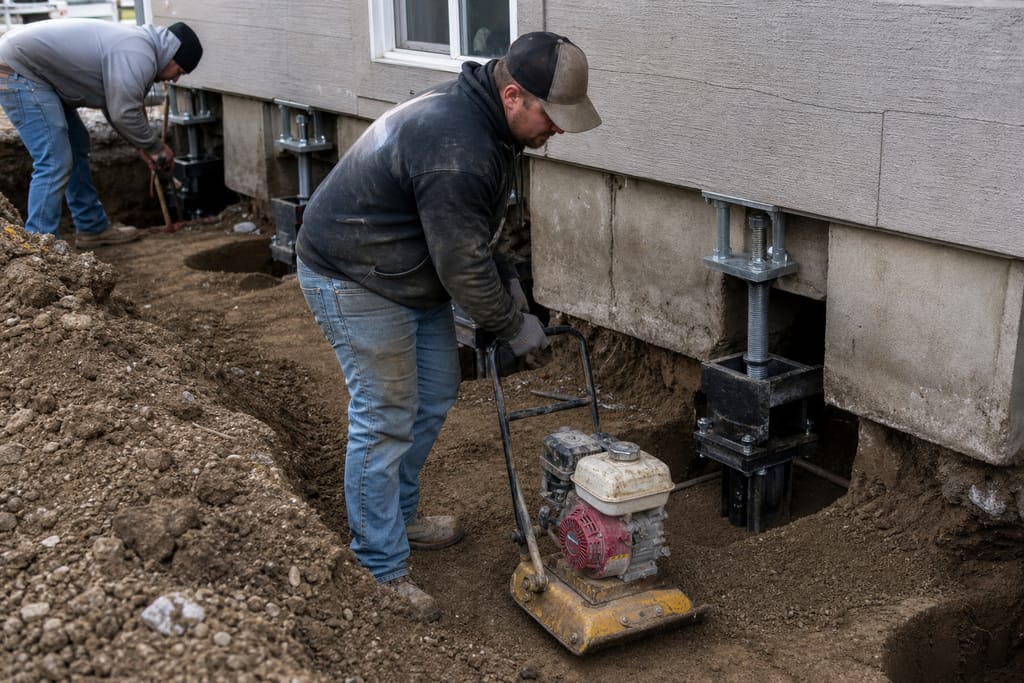
Compacted Fill Material
Used to stabilize soil around newly installed piers.
Questions on materials?
Get a Free EstimateTimeline
How long does a Piering and Underpinning take?
A single-corner job moves faster than a full perimeter underpinning project.
- 01
Consult and pier count assessment
same day - 02
Permit filing
1–2 weeks - 03
Excavation
1 day - 04
Pier installation
1–3 days - 05
Leveling and load transfer
1 day - 06
Backfill and site restoration
1 day
Need a schedule that fits?
Get a Free EstimateFAQs
Piering and Underpinning FAQs
How much does underpinning cost per pier?
Pricing is typically quoted per pier, with most residential jobs running a handful of piers for a corner and more for a full wall. Your free estimate will break out the per-pier number and total count.
Do I need a permit to install push piers in Salt Lake County?
Generally yes. Underpinning is a structural repair and typically goes through permit review with engineer sign-off. Verify specifics with your local building department.
Push piers or helical piers, what's the difference?
Push piers get driven using the weight of the structure itself and work well for heavier homes. Helical piers screw in and suit lighter loads or additions. We'll recommend based on soil and load.
Can I install piers myself?
No. This is load-bearing structural work with engineering behind the pier count and placement. It's not a DIY-scope repair.
How long do piers last?
Properly installed steel piers driven to bearing soil are built to be a permanent fix, not a temporary patch.
Next step
Get a Piering and Underpinning estimate in Millcreek
Call Millcreek Foundation Pros for a pier count assessment, or contact us to schedule a free estimate.
How it works
Our process
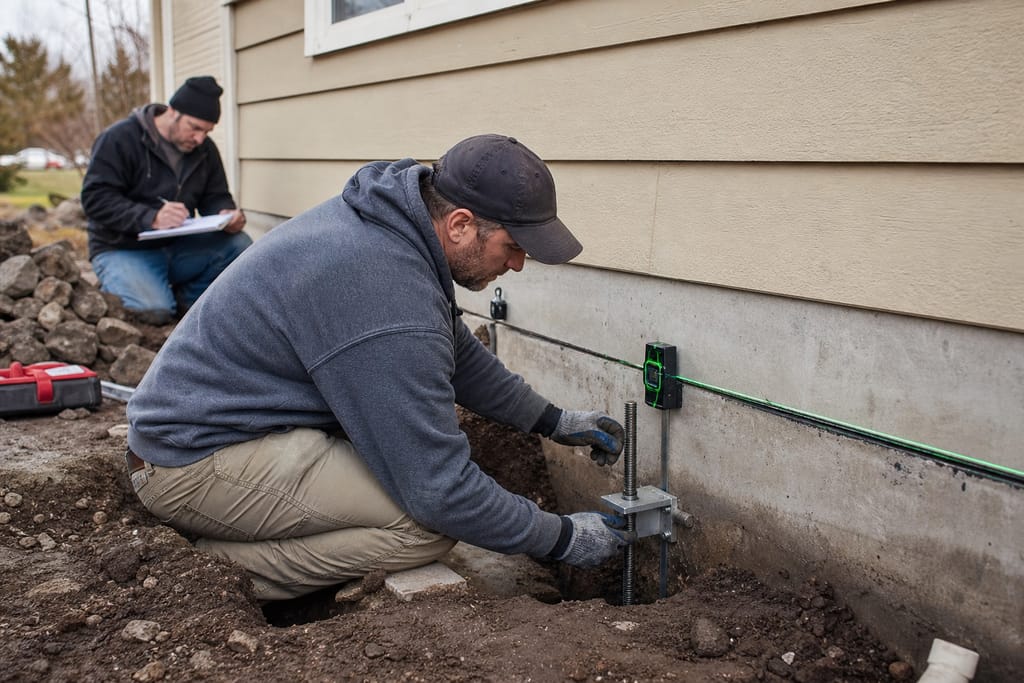 Step 1
Load Assessment
The structure's weight distribution is analyzed to determine pier placement.
 Step 2
Access Excavation
Small excavation points are created along the foundation perimeter.
 Step 3
Pier Driving
Piers are driven or screwed into the ground until reaching stable strata.
 Step 4
Load Transfer
Brackets connect the piers to the foundation to redistribute structural weight.
 Step 5
Leveling Adjustment
Hydraulic equipment carefully raises the foundation to its intended position.
 Step 6
Site Restoration
Excavated areas are backfilled and compacted to match the original grade.
More services
Other Foundation Repair services
Foundation Repair
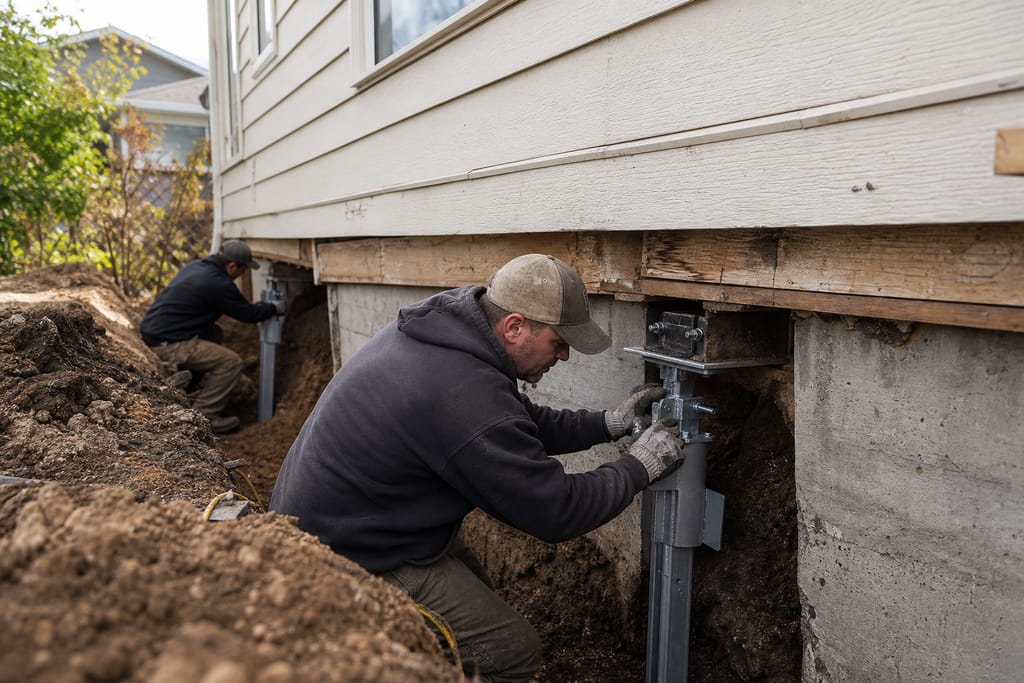
Foundation repair in Millcreek using push piers, helical piers, and epoxy injection. Free estimates, written scope before work starts.
Wall Stabilization
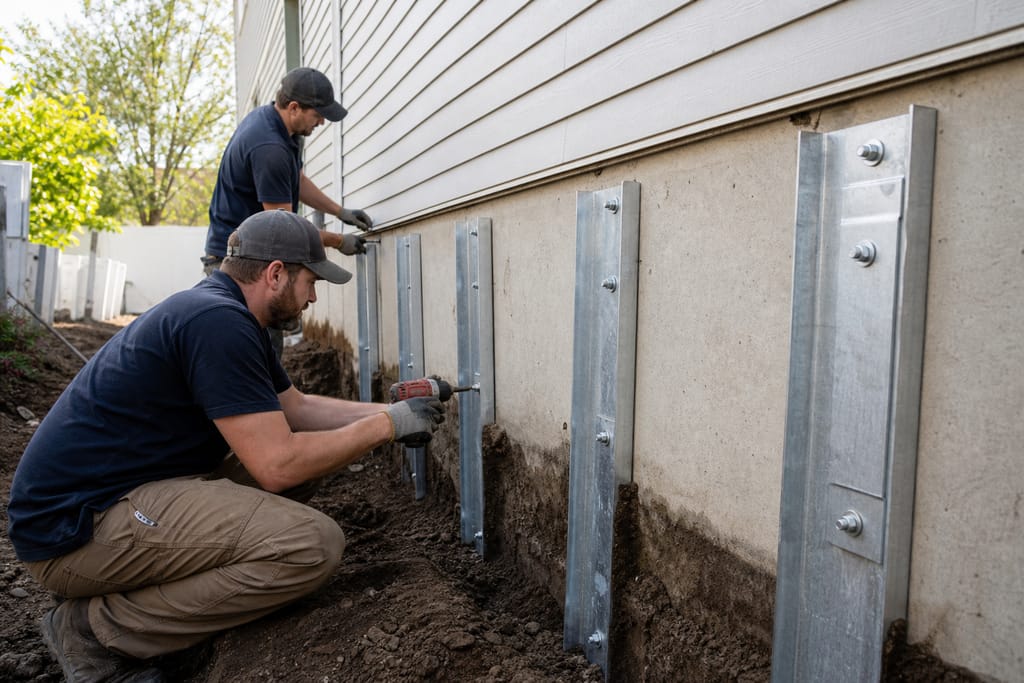
Carbon fiber straps and steel bracing for bowing basement walls in Millcreek. Free estimates, written scope before work starts.
Foundation Crack Repair
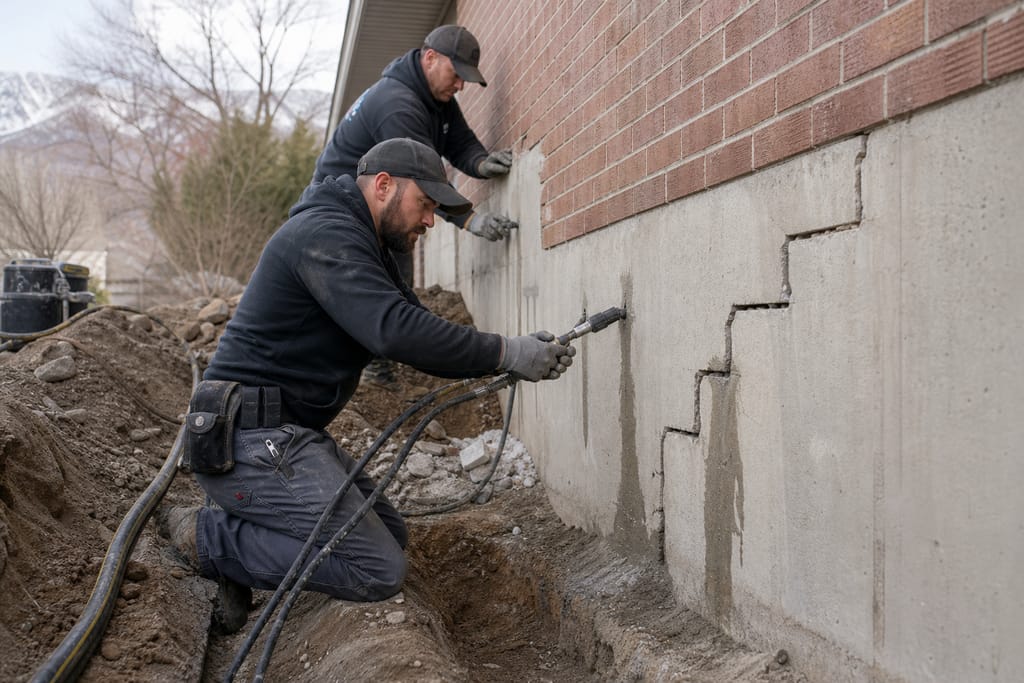
Foundation crack repair in Millcreek with epoxy and polyurethane injection, free estimates, same-day sealing for hairline and structural cracks.
Ask about Piering and Underpinning
Tell us about the project and how to reach you.